
The Best Baklava Cheesecake Recipe
This post may contain affiliate links.
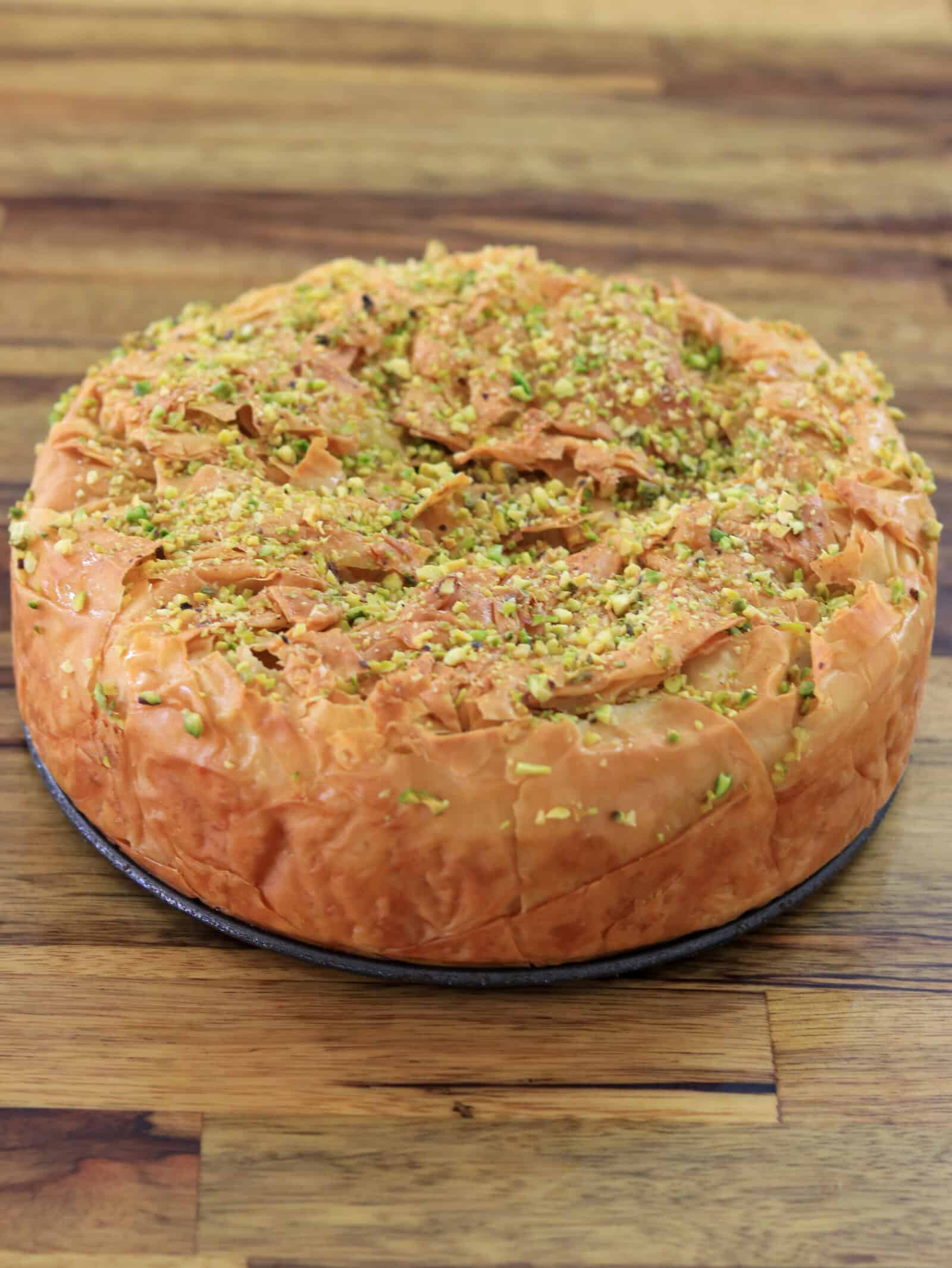
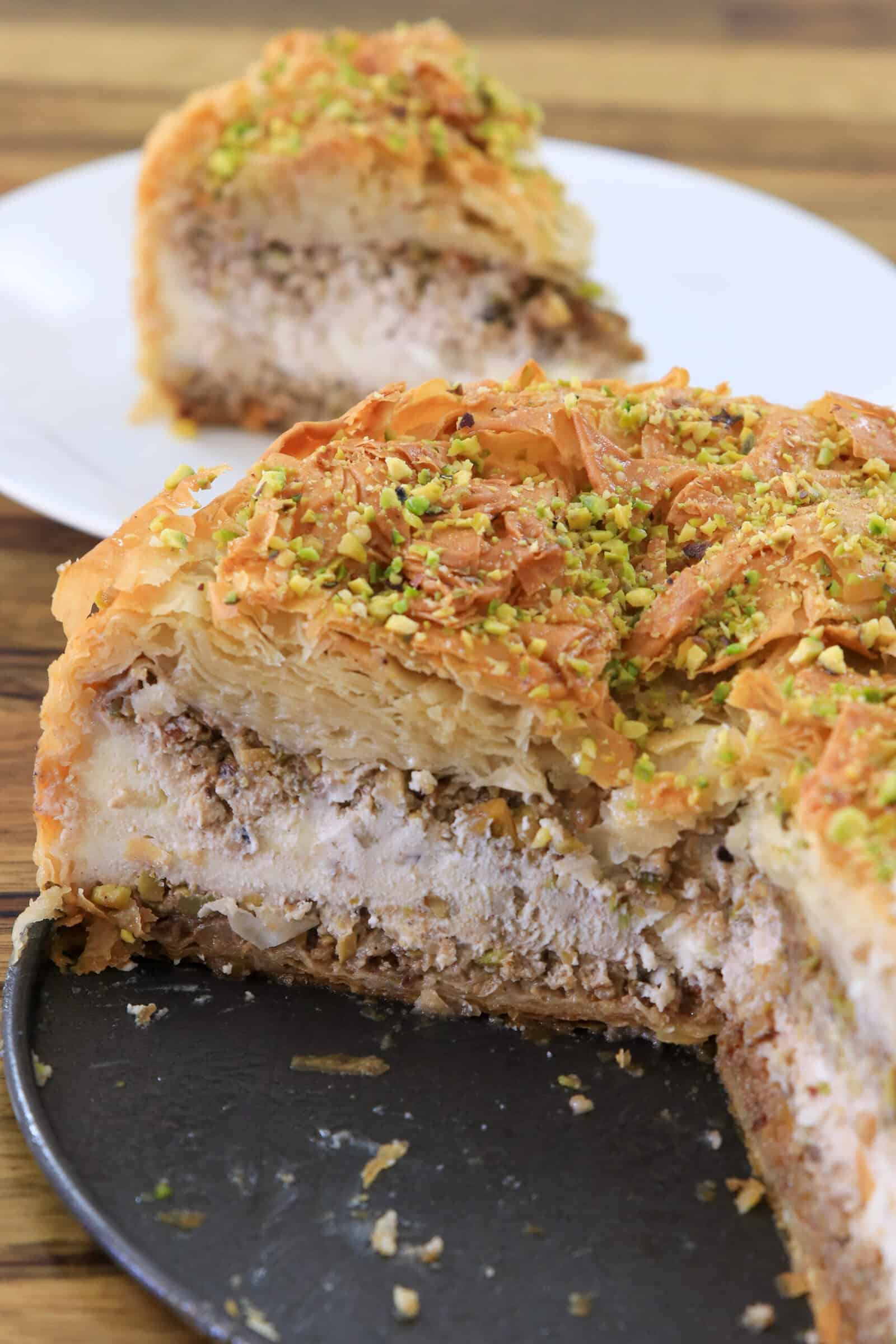
Next time you need a dessert that’s guaranteed to impress, reach for my delectable Baklava Cheesecake recipe. It combines the flaky, buttery, nutty goodness of a favorite Greek sweet with creamy New York-style cheesecake for a slice that’ll rock your world.
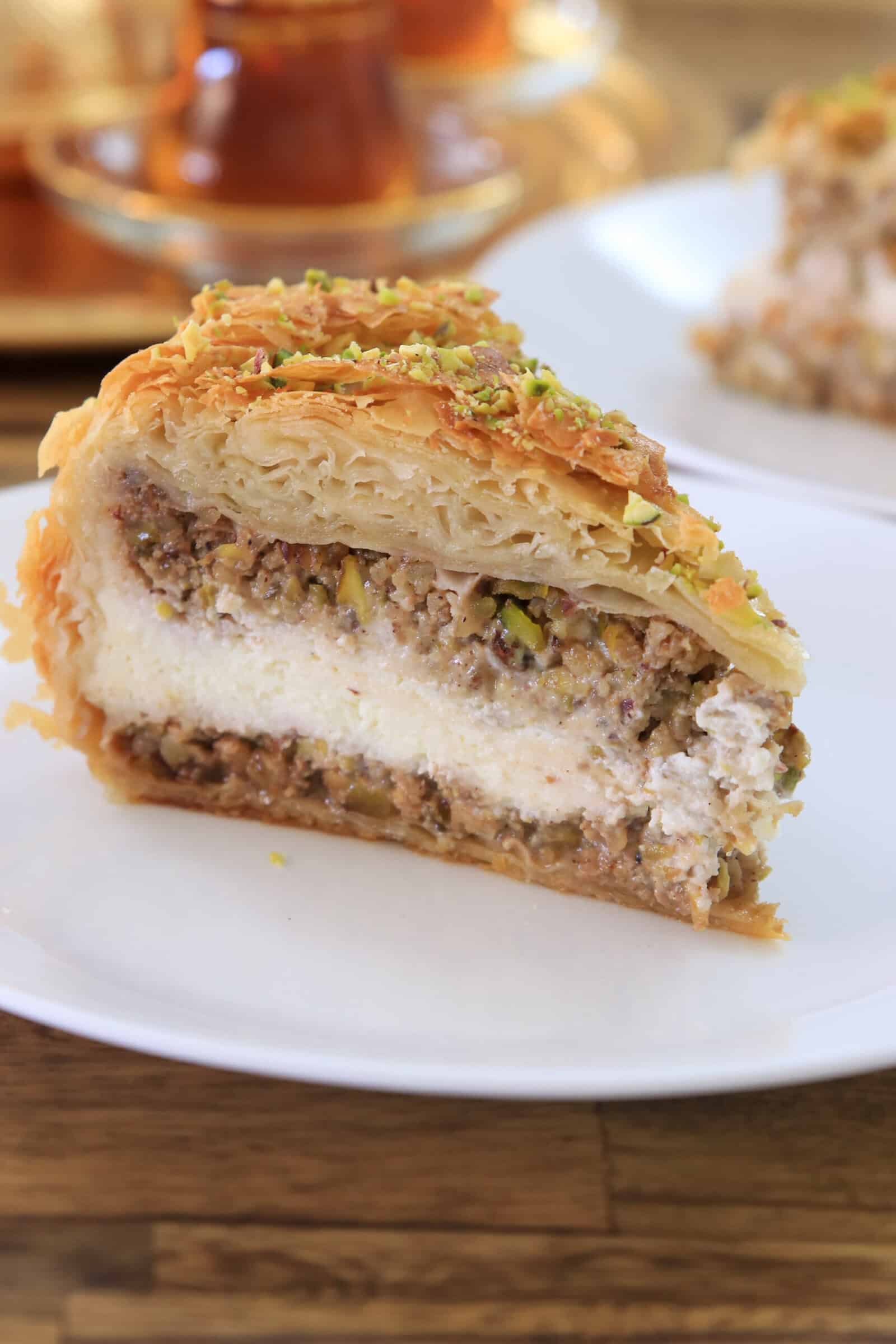
If you love authentic baklava and classic cheesecake, my hybrid baklava cheesecake is right up your alley. Tangy, creamy, custardy cream cheese filling is sandwiched between crisp phyllo pastry and crunchy walnut-pistachio layers then soaked in a honey-rose water syrup so you get the best of both worlds in every bite!
I originally published this recipe in 2020 and have since updated it with new photos, improved instructions, and extra success tips.
Ingredients & Substitutions
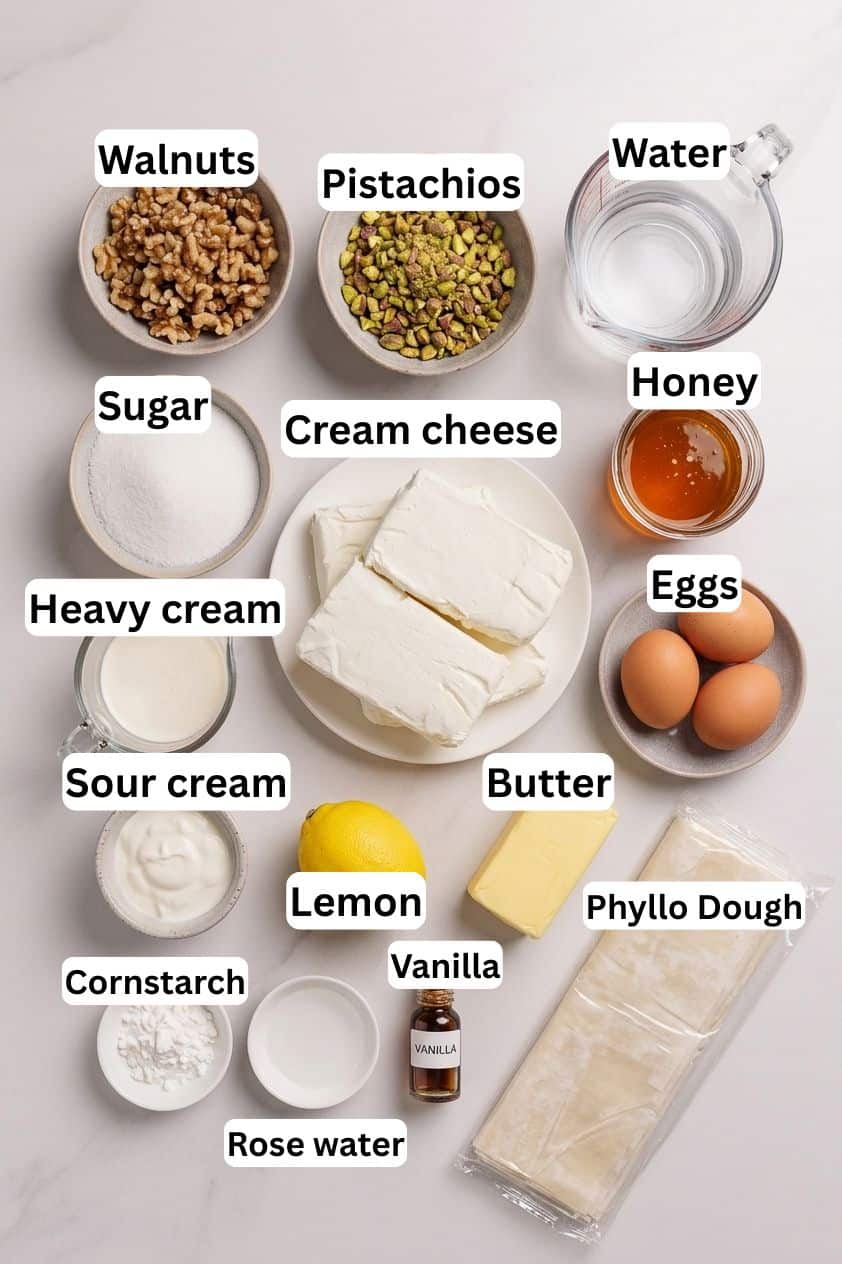
- Toasted Walnuts & Pistachios – The classic nut combination for baklava.
- Ground Cinnamon & Salt – Basic seasonings help the nut filling taste sweeter without any added sugar.
- Water & Granulated Sugar – Simple syrup (equal parts water and sugar) is the base for the soaking liquid.
- Honey – Feel free to experiment with different local varieties to find your favorite honey flavor.
- Lemon Juice & Zest – We’ll add the juice to the soaking liquid and the zest to the cheesecake filling for brightness. Make sure to zest first, then juice, for the easiest results.
- Rose Water – Optional, but delicious and traditional! A little goes a long way.
- Cream Cheese – Make sure you’re reaching for full-fat block-style cream cheese for the best flavor and texture.
- Sour Cream – For added creaminess and tang. You can also swap in full-fat Greek yogurt or labna if needed.
- Large Eggs – Let them come to room temperature for easier mixing. If you forgot to take them out of the fridge ahead of time, pop them in a bowl of warm (not hot) water for about 10 minutes.
- Heavy Cream – Also known as “double cream.” For a rich, silky texture. If needed, swap in slightly lighter whipping cream.
- Cornstarch – For thickening the cheesecake filling. If you’re allergic to corn, potato starch is a perfect 1:1 swap.
- Vanilla Extract – For depth and aromatic sweetness. You can use an equal amount of vanilla paste if you prefer.
- Unsalted Butter – For brushing the phyllo dough layers to help them crisp up. If you can swing it, the added fat content and rich flavor of cultured European-style butter is worth it.
- Phyllo Dough Sheets – These paper-thin sheets are layered with butter, baking up an exceptionally crispy cheesecake crust or shell. You should be able to find them in the frozen aisle.
This is just a short review of the ingredients; for the complete recipe, including quantities, scroll down to the recipe card 👇
How to Make Baklava Cheesecake
Watch the full video to learn how to make the BEST Recipe for Baklava Cheesecake. This step-by-step tutorial simplifies the process, offering tips and tricks to guarantee perfect results every time.
Prefer the written recipe? Scroll down to the recipe box 👇
How to Assemble Baklava Cheesecake
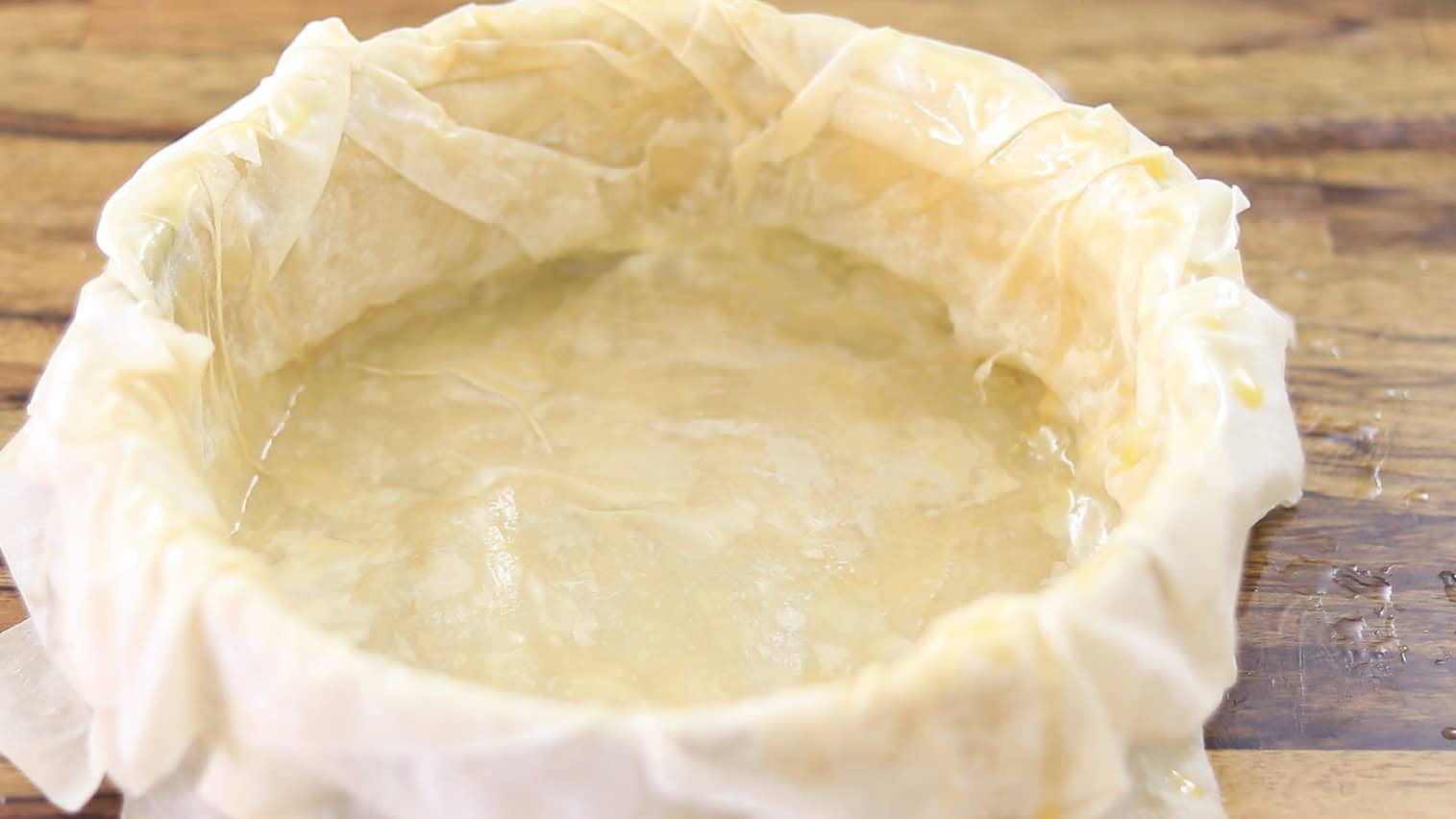
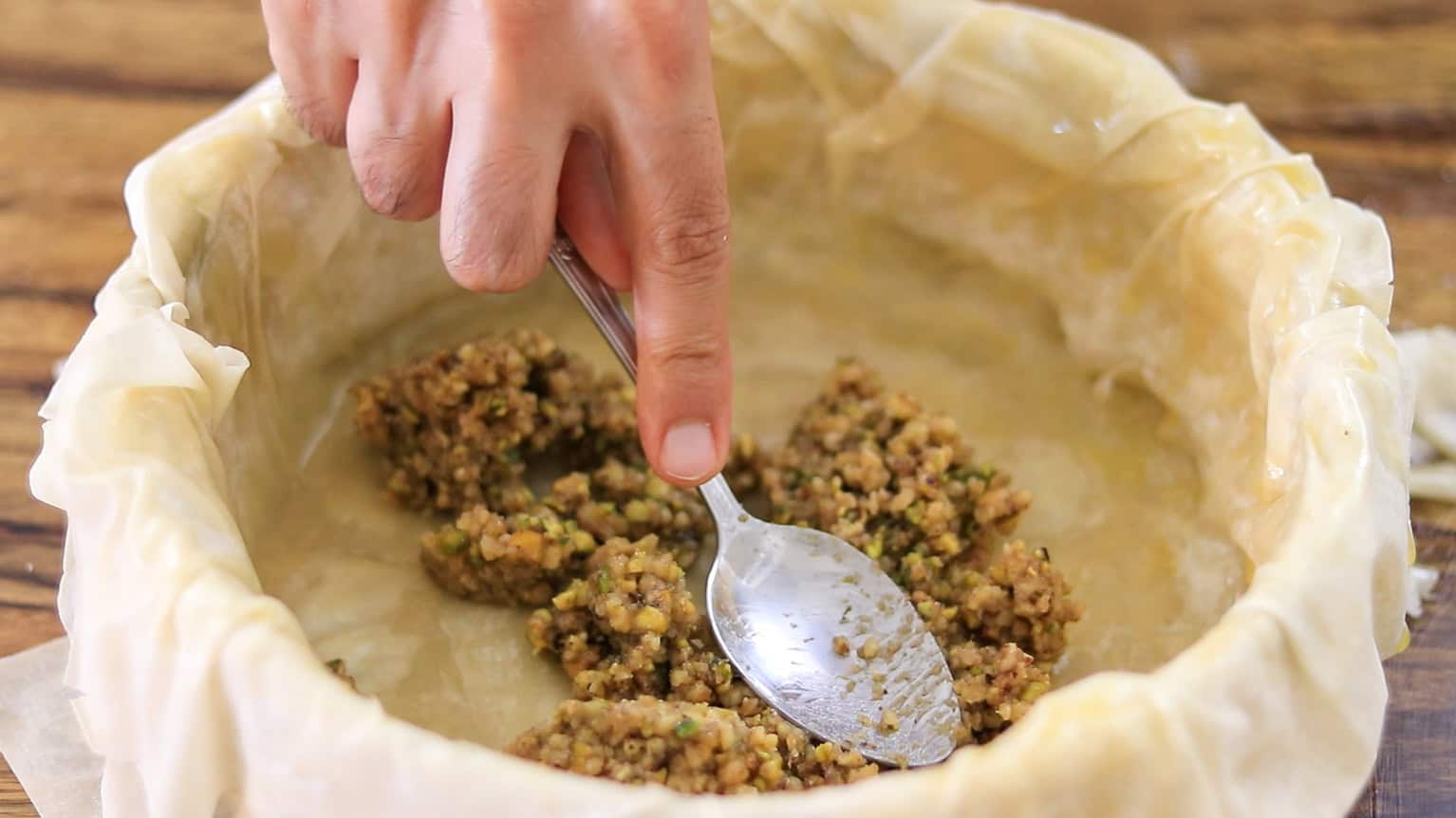
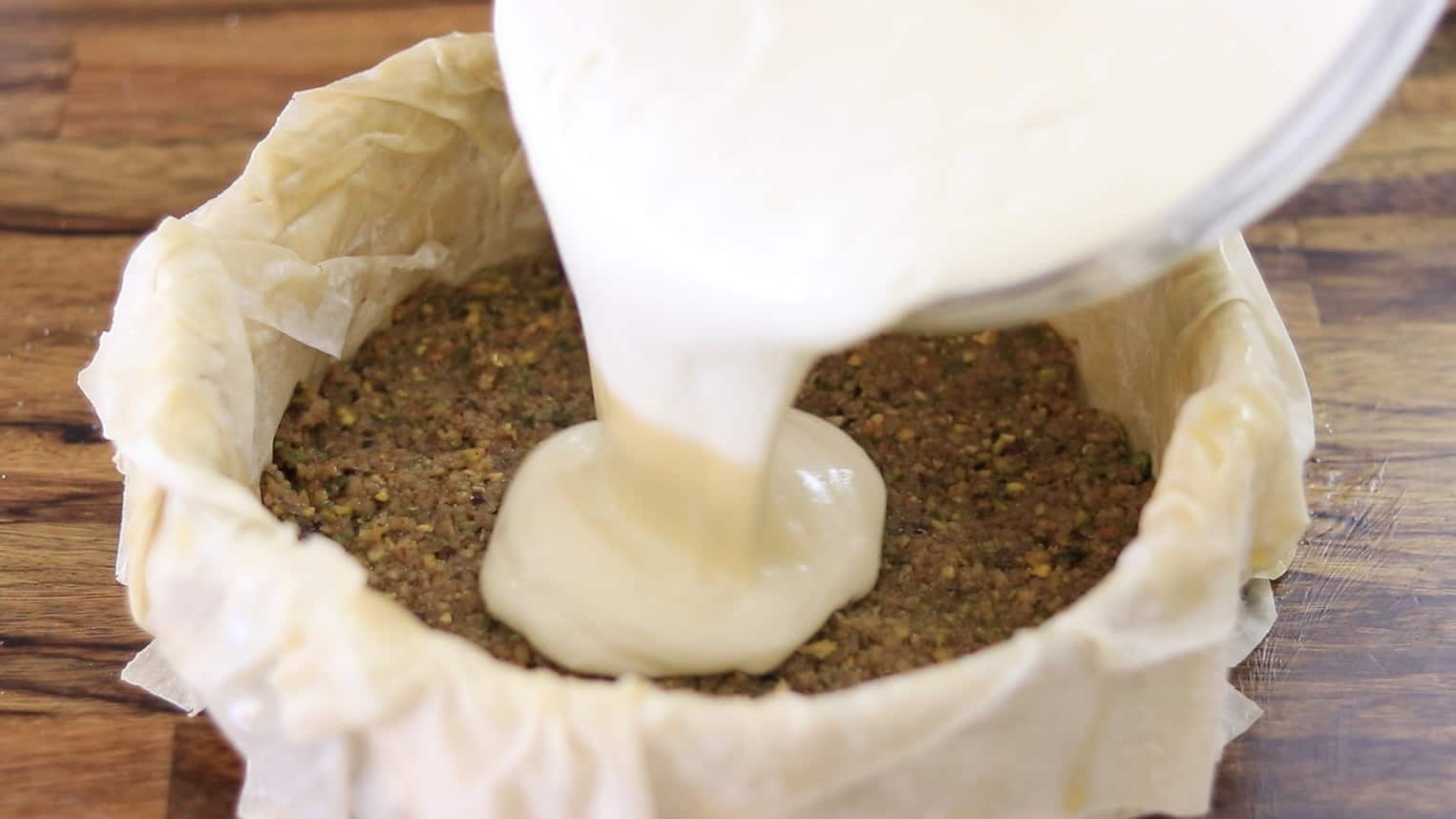
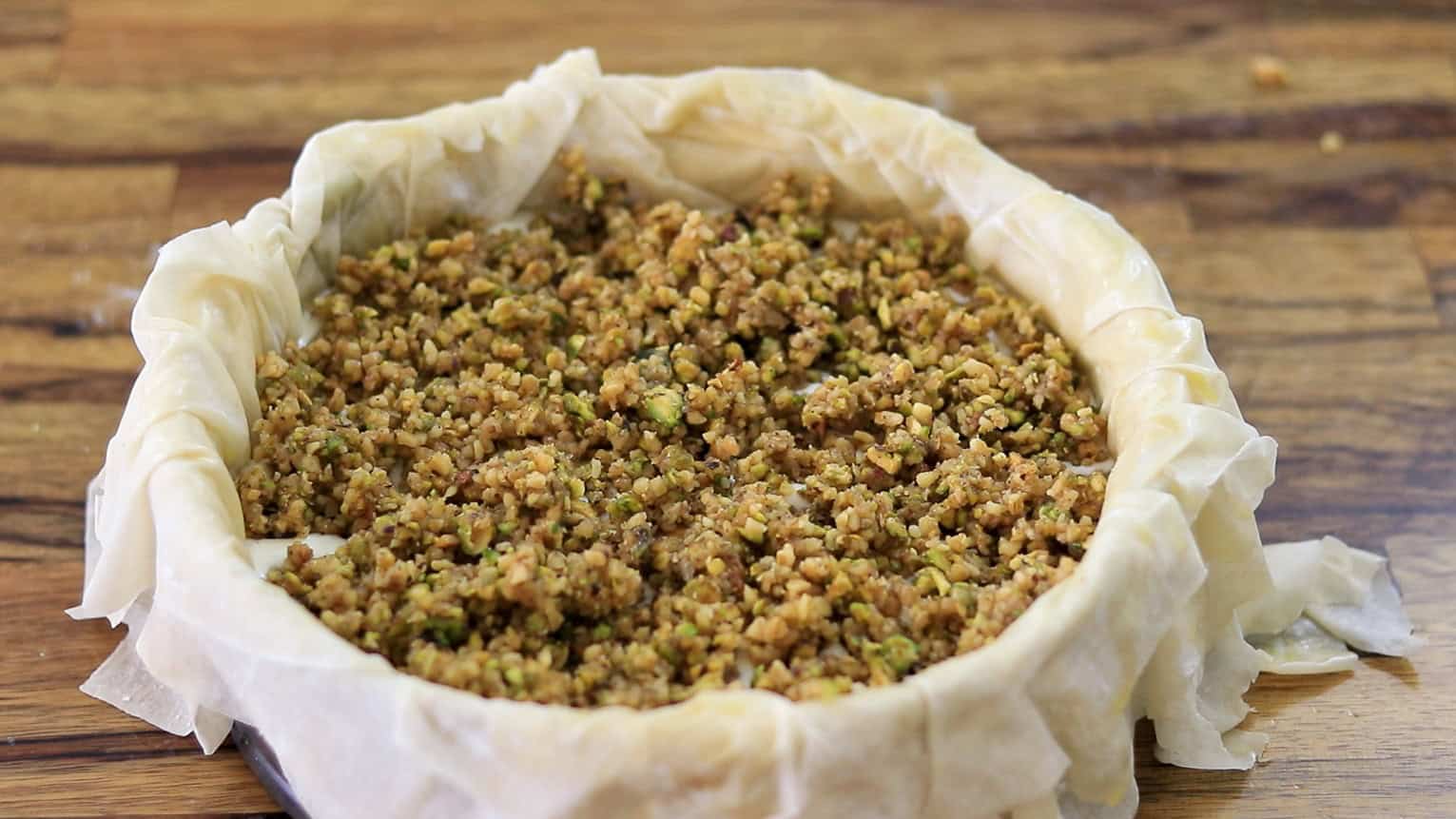
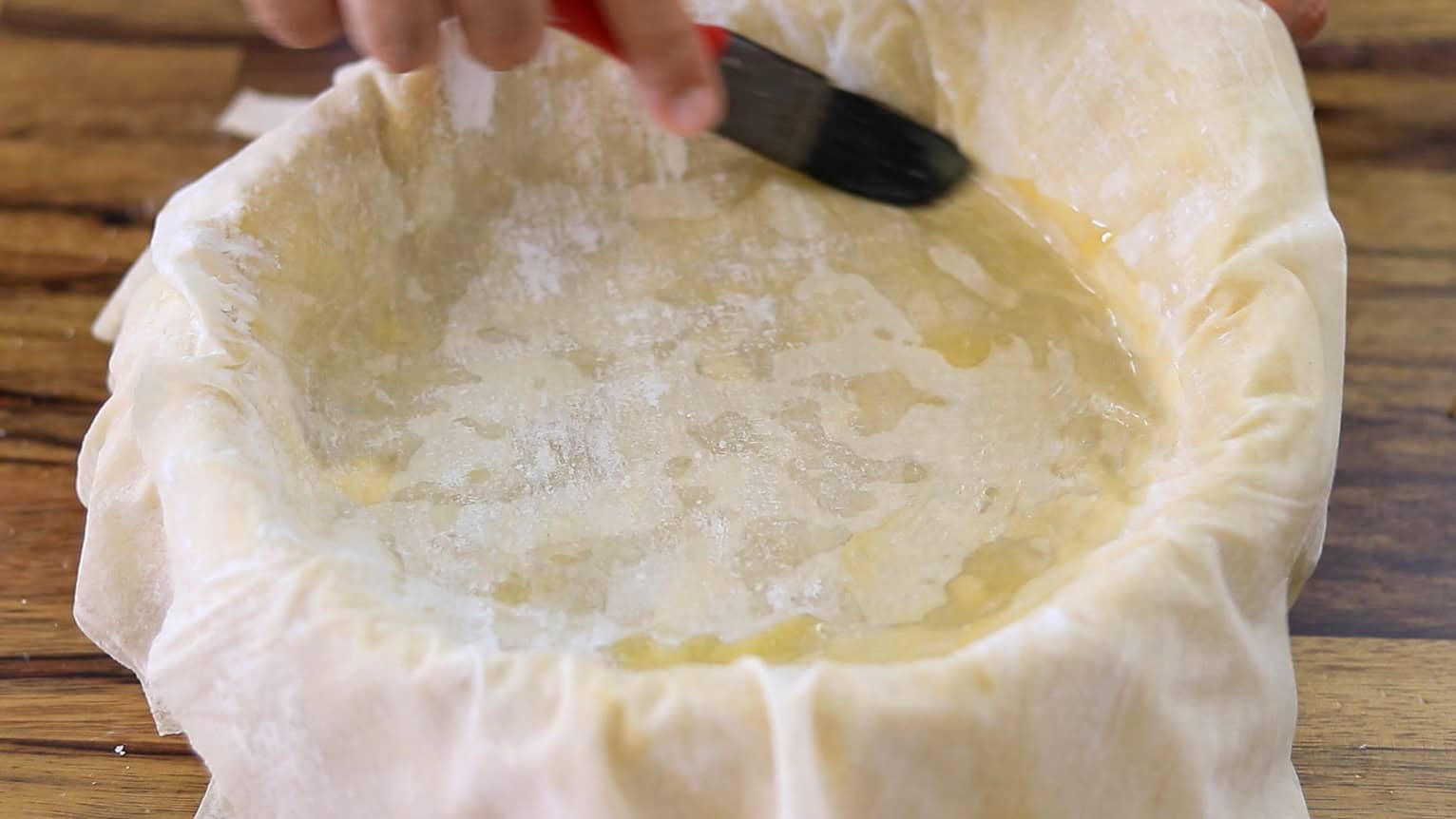
Assembling baklava cheesecake looks more complicated than it actually is. Just think of it as building layers. Follow this order and don’t worry if the phyllo isn’t perfectly neat, the finished cheesecake will still look beautiful.
- Line a 9-inch springform pan with buttered phyllo sheets, letting the excess hang over the sides. Sprinkle half of the nut mixture over the bottom.
- Pour in the cheesecake filling and spread it into an even layer.
- Add the remaining nut mixture over the cheesecake filling.
- Fold the overhanging phyllo sheets over the top, then finish with a few more buttered sheets.
- Brush generously with melted butter until every exposed piece of phyllo is coated.
- Bake until the cheesecake is set and the phyllo is deeply golden, then immediately pour the cooled syrup over the hot cheesecake.
Keep Phyllo Dough Covered and Work Quickly
Phyllo dough dries out within minutes once exposed to air, making it brittle and difficult to handle. Keep the unused sheets covered with a slightly damp kitchen towel and uncover only one sheet at a time.
Work at a steady pace, but don’t worry if a sheet tears; a few small cracks won’t matter once everything is layered and baked.
Pour Cold Syrup Over Hot Cheesecake
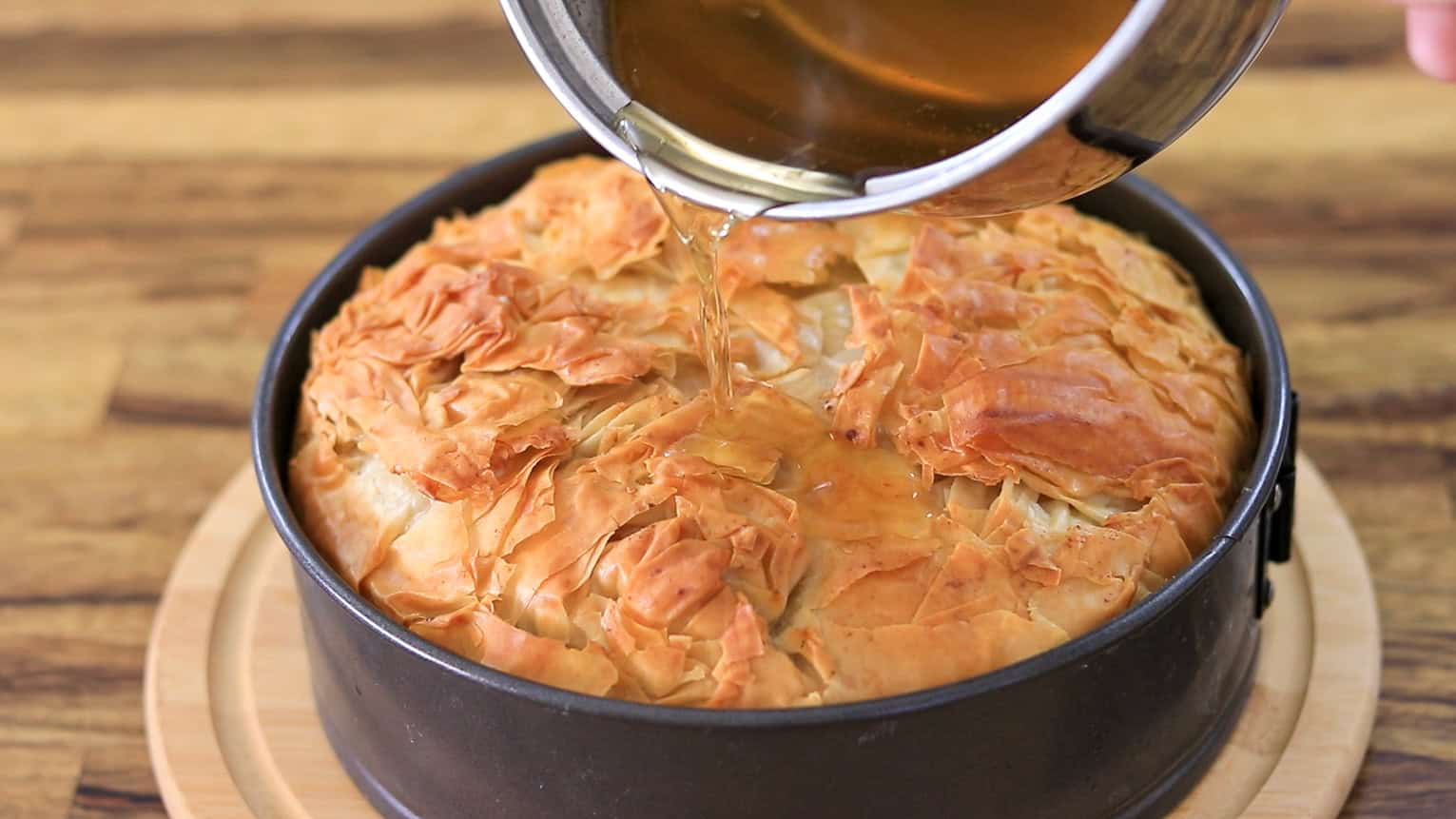
Just like traditional baklava, saragli (rolled baklava), and kunafa, this dessert relies on the contrast between a hot pastry and cool syrup. As soon as the cheesecake comes out of the oven, slowly pour the cooled syrup over the hot phyllo. The temperature difference helps the syrup absorb properly while keeping the phyllo crisp instead of soggy.
You don’t have to use all of the syrup. Since the cheesecake filling is already sweet, many people prefer using about ¾ of the syrup and serving the rest on the side. Add as much or as little as you like depending on how sweet and syrupy you want the finished cheesecake.
Expert Tips & Tricks
- Room Temperature Ingredients are Key. Cold cream cheese creates lumps, and cold eggs don’t incorporate smoothly. Let all dairy and eggs sit at room temperature for 30-60 minutes before mixing for an ultra-smooth, creamy filling.
- Don’t Overmix the Batter. Once you add the eggs, mix just until combined. Overmixing incorporates too much air, which can cause cracks and a less creamy texture in your finished cheesecake.
- Toast Your Nuts First. Toasting walnuts and pistachios for 8-10 minutes at 350°F intensifies their flavor and adds a deeper, richer taste to the baklava layer. Let them cool completely before chopping.
- Use a Sharp Knife for Clean Cuts. Dip your knife in hot water and wipe it dry between each cut for clean, professional-looking slices that showcase the beautiful layers.
- Let it Rest Overnight. For the best flavor and texture, refrigerate the finished baklava cheesecake overnight. This allows the syrup to fully soak in and the flavors to meld together beautifully.
Optional Variations & Dietary Adaptations
- Baklava Pistachio Cheesecake – Blend homemade pistachio paste and fold it into the cheesecake batter for a nutty, vibrant green-hued filling that doubles down on the classic baklava flavor.
- Orange Blossom Twist – Swap the rose water for orange blossom water or orange juice in the syrup (similar to portokalopita recipe), and replace the lemon zest in the filling with orange zest for a citrusy, floral variation that’s equally traditional in Middle Eastern desserts.
- Chocolate Drizzle – After baking and cooling, drizzle melted dark chocolate over the top for a decadent, modern twist that’s Dubai chocolate bar-inspired.
- Almond or Hazelnut Base – Substitute half or all of the walnuts with toasted almonds or hazelnuts for a different flavor profile while keeping the traditional baklava spirit intact.
- Maple-Honey Syrup – Replace half of the honey with pure maple syrup for a deeper, more complex sweetness that adds a subtle caramel note to the soaking liquid.
- Individual Mini Cheesecakes – Use a mini cheesecake tin lined with buttered phyllo cups to create individual servings, perfect for parties or portion control. Just reduce the cooking time as needed.
Storage Instructions
- Refrigerator Storage – Store covered in the refrigerator for up to 5 days. The phyllo will soften slightly over time, but the flavor gets even better.
- Freezing Instructions – Freeze individual slices (or the whole cheesecake) for up to 2 months. Thaw overnight in the refrigerator before serving. Keep in mind that the phyllo won’t be quite as crispy after freezing.
- Serving from Cold – Baklava cheesecake is best served chilled or at room temperature. If you prefer it less cold, let it sit at room temperature for 15-20 minutes before serving to allow the flavors to bloom.
More Cheesecake Recipes
Baklava Cheesecake Recipe
Ingredients
For the nut mixture:
- 8 oz (225 g) Walnuts toasted
- 8 oz (225 g) Pistachios toasted
- 1 teaspoon Cinnamon
- ¼ teaspoon Salt
For the syrup:
- 1 cup (240 ml) Water
- 1 cup (200 g) Granulated sugar
- ¼ cup (85 g) Honey
- 1 tablespoon Lemon juice
- 1-2 teaspoons Rose water
Cheesecake:
- 2 cups (450 g) Cream cheese softened
- 1 cup (230 g) Sour cream or yogurt
- ⅔ cup (133 g) Granulated sugar
- 3 Eggs
- ¼ cup (60 ml) Heavy cream
- 1 tablespoon Lemon zest
- 3 tablespoons (22 g) Cornstarch
- 1 teaspoon Vanilla extract
Assembling:
- 200 g (200 g) Butter Unsalted, melted
- 12-14 Phyllo dough sheets thawed
- Pistachios Chopped, for garnish
Instructions
- Prepare the nut filling: Add the toasted walnuts, toasted pistachios, cinnamon, and salt to a food processor. Pulse until coarsely ground, you want small pieces, not a fine powder. Transfer to a bowl and set aside.
- Make the syrup: In a small saucepan, combine the water, sugar, honey, lemon juice, and rose water (if using). Bring to a boil over medium heat, stirring until the sugar has completely dissolved. Reduce to a gentle simmer and cook for 4–5 minutes.
- Pour about ⅓ of the syrup over the nut mixture and stir until evenly coated. Reserve the remaining syrup for later and let it cool completely.
- Prepare the pan: Preheat the oven to 170°C (340°F). Grease the bottom and sides of a 9-inch (23 cm) springform pan with butter.
- Make the cheesecake filling: In a large bowl, beat the cream cheese and sugar until completely smooth and creamy.
- Add the eggs one at a time, mixing well after each addition. Add the sour cream (or yogurt), heavy cream, vanilla extract, lemon zest, and cornstarch. Mix just until smooth and fully combined. Avoid overmixing.
- Assemble the cheesecake: Keep the phyllo dough covered with a slightly damp towel while working to prevent it from drying out.
- Place one sheet of phyllo into the prepared pan, pressing it gently into the bottom and sides while allowing the excess to hang over the edges. Lightly brush with melted butter.
- Repeat with 8–10 sheets, rotating them slightly each time so the entire pan is evenly covered.
- Spread half of the nut mixture evenly over the phyllo crust. Pour the cheesecake filling over the nuts and smooth the top. Sprinkle the remaining nut mixture evenly over the cheesecake filling.
- Cover with 2–3 more buttered phyllo sheets, then gently fold the overhanging phyllo over the top to enclose the cheesecake. Brush the top generously with the remaining melted butter.
- Bake: Bake for 45–50 minutes, or until the phyllo is deep golden brown and the cheesecake is mostly set with a slight wobble in the center.
- If the top begins browning too quickly, loosely tent it with aluminum foil after about 30 minutes.
- Finish and chill: While the cheesecake is still warm, slowly pour the remaining cooled syrup evenly over the top, allowing it to soak into the phyllo.
- Let the cheesecake cool completely at room temperature, then refrigerate for at least 4 hours, preferably overnight.
- Before serving, garnish with chopped pistachios.
Video
Notes
- Rose Water: Rose water (also called rose essence or rose floral water) is a fragrant ingredient commonly used in Middle Eastern desserts like baklava. It’s optional, but I highly recommend adding it, it gives the syrup the classic floral aroma that makes baklava so special. A little goes a long way, so don’t be tempted to add too much.
- How do I know when the cheesecake is done? Since the cheesecake is covered with phyllo, you won’t be able to see the center. Instead, gently shake the pan, it should have a slight wobble in the middle but shouldn’t look liquid underneath the phyllo. The cheesecake will continue to set as it cools.
- Working with phyllo dough: Phyllo dries out very quickly. Keep the unused sheets covered with a slightly damp kitchen towel while you work, and don’t worry if a sheet tears a little, once layered and brushed with butter, no one will notice.
- Make ahead: This cheesecake is even better the next day. An overnight chill allows the flavors to develop and makes the slices much cleaner.
- Storage: Store covered in the refrigerator for up to 4 days. The phyllo will gradually soften over time but will still taste delicious.
Nutrition
FAQs
Yes. In fact, it’s even better after resting overnight in the refrigerator. This gives the cheesecake time to fully set and allows the syrup and flavors to meld together.
Absolutely. Traditional baklava often combines walnuts and pistachios, but you can use only pistachios or substitute almonds or hazelnuts if you prefer.
No. This recipe is designed to bake without one, making it much easier while still producing a creamy cheesecake.


This recipe is out of this world. Not a fast one to make, but it is sensational. So far I have 4 of your cheesecake recipes, and all have been a hit. I was wondering if I could use ghee instead of the melted butter.
Thank you so much! I’m so happy to hear that my cheesecake recipes have been a hit! And yes, you can definitely use ghee instead of the melted butter.
This is the most beautiful and unique cheesecake I’ve ever seen!